
The Football Fan's Guide to VAR
Video Assistant Referee (VAR) is a football officiating system that checks match-changing decisions through replay, but it does not replace the referee. In competitions approved by FIFA and operated u...
The Football Fan's Guide to VAR
Video Assistant Referee (VAR) is a football officiating system that checks match-changing decisions through replay, but it does not replace the referee. In competitions approved by FIFA and operated under the International Football Association Board (IFAB) protocol, VAR reviews four areas: goals and no goals, penalty decisions, direct red cards, and mistaken identity. The Video Assistant Referee watches independent broadcast feeds, checks the incident, and alerts the referee only when there may be a clear and obvious error or serious missed incident. The referee keeps the final authority, either accepting information from the VAR or conducting an on-field review. VAR was used prominently at the 2018 FIFA World Cup and remains central to major competitions such as the UEFA Champions League and FIFA World Cup 2026. The practical takeaway is simple: watch the referee’s signal, not the replay alone, because the original decision changes only when the evidence is strong enough.
A dramatic example came during a major tournament match when a penalty appeal looked obvious from the first camera angle, yet the referee allowed play to continue. The VAR team checked the incident, found that contact was outside the penalty area, and recommended a review. The referee watched the replay, reversed the decision, and the match moved on. That is VAR at its best: not a second referee chasing every small mistake, but a controlled insurance policy for decisions that can swing a result, a qualification place, or a betting market.
Listen up — this is the part that matters: VAR is not designed to make football perfectly mechanical. It is designed to correct serious errors without turning every tackle into a courtroom hearing. That distinction explains why one incident is reviewed in detail while another, equally controversial to supporters, is left alone. If you follow the FIFA World Cup, UEFA Champions League, or daily match analysis from Fan Strategy, understanding that boundary gives you a much sharper read on goals, penalties, cards, and live match momentum.
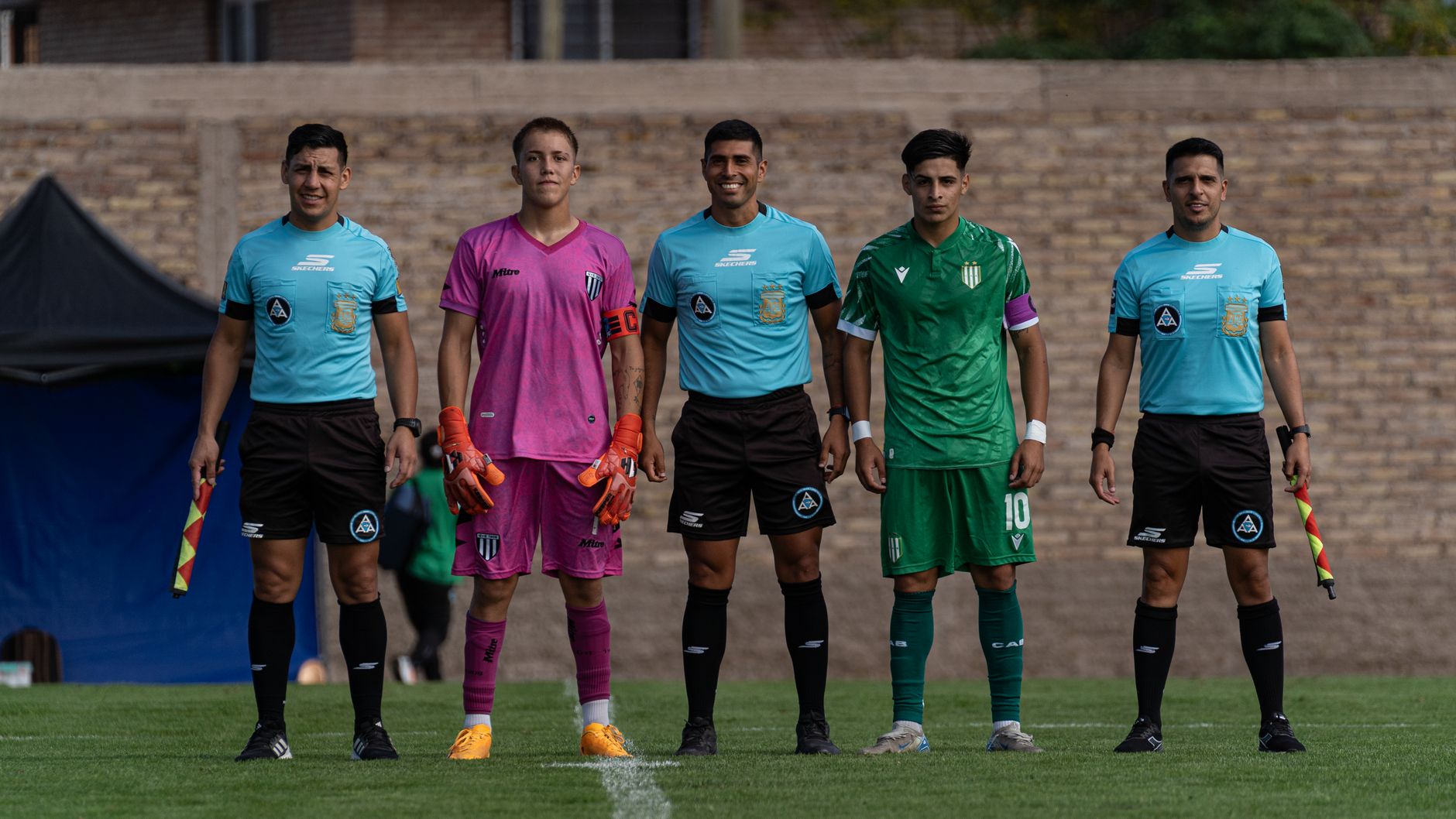
Photo by Franco Monsalvo on Pexels
Want the practical version before the next match? Start with the core review rules.
If you are watching a disputed goal: track the four-stage check
VAR checks a goal for a possible clear and obvious error or serious missed incident before confirming it. The review can examine an offside offence, handball, foul, goalkeeper infringement, or another attacking violation in the attacking phase that led to the goal. The on-field referee still makes the final decision, and the goal is not automatically cancelled simply because replay shows a minor technical infringement.
The process normally follows a disciplined sequence:
- The referee makes an initial decision, such as awarding a goal.
- The VAR automatically checks the relevant footage and the attacking build-up.
- If the footage shows no serious issue, the referee keeps the decision and play restarts.
- If the VAR sees a possible clear and obvious error, the referee receives a recommendation.
- The referee either accepts factual information, such as an offside line, or performs an on-field review for a judgement call.
- The final decision is communicated through the referee’s signal and the public announcement system where available.
Offside is where viewers often expect instant certainty, but the evidence is not always clean. Camera alignment, the exact moment of the pass, body parts that may legally score, and the quality of the broadcast feed all matter. A drawn line can look authoritative while still depending on the selected frame. This is why semi-automated offside technology, used in FIFA competitions, can improve speed and consistency by helping identify the kick point and relevant player positions, but it still sits within the wider officiating process.
The data also has a betting consequence. A goal that appears settled may remain under review for 30 seconds or longer, and some operators suspend markets during that period. A sharp bettor does not treat a provisional goal as settled information. You should wait for the referee’s restart and the sportsbook’s confirmation, especially when a goal affects over-and-under markets, both-teams-to-score selections, or live match odds. For broader tournament context, see the [Internal Link: FIFA World Cup 2026 match guide].
What does VAR check before a goal is confirmed?
Before confirming a goal, VAR checks the attacking phase for offside, handball, fouls, goalkeeper offences, and other reviewable incidents that could invalidate the score. The check is automatic, but a full referee review is used only when the evidence may show a clear and obvious error or serious missed incident.
The key phrase is “attacking phase.” VAR does not rewind an entire match looking for a foul five minutes earlier. The relevant period begins with the possession or attacking movement that directly leads to the goal, subject to the Laws of the Game and the competition’s protocol. If the ball changes possession, the earlier incident may no longer matter because the attacking sequence has effectively reset.
IFAB’s official protocol states that “the referee must always make a decision.” That rule matters because the referee cannot simply refuse to call an incident and ask technology to decide from scratch. VAR supports an existing decision or identifies a serious missed incident; it does not become an invisible replacement official. The full framework is available in the IFAB Video Assistant Referee protocol, which explains reviewable incidents, restart limits, and the referee’s authority.
If you are judging a penalty appeal: separate contact from an offence
A penalty decision can be reviewed when the referee awards a penalty, refuses one, or misses a serious incident inside the penalty area. VAR does not ask whether contact occurred in the abstract; it asks whether the contact, handball, or challenge amounts to an offence under the Laws of the Game. That is a much narrower question, and it is why slow-motion clips can mislead viewers.
Consider a forward who steps across a defender and goes down. One replay may show the defender’s knee touching the attacker’s leg, while another reveals that the attacker initiated the movement. Speed, direction, position, and the player’s action all shape the decision. VAR can provide the referee with better evidence, but it cannot turn a subjective judgement into a mathematical answer. The referee may keep the original no-penalty call if the footage does not clearly prove an error.
Handball creates a similar problem. The ball striking an arm is not automatically a foul. The referee considers the arm position, the player’s movement, the distance from the ball, and whether the action makes the body unnaturally bigger. A penalty may therefore survive review even when supporters insist that “hand to ball” or “ball to hand” settles everything. It does not.
If you are evaluating a match for Fan Strategy, record three details before reacting: the location of contact, the direction of movement, and whether the referee saw the incident live. Those details often explain why a review is recommended in one penalty situation but not another. They also stop you from paying a premium for a betting opinion built on a single freeze-frame.
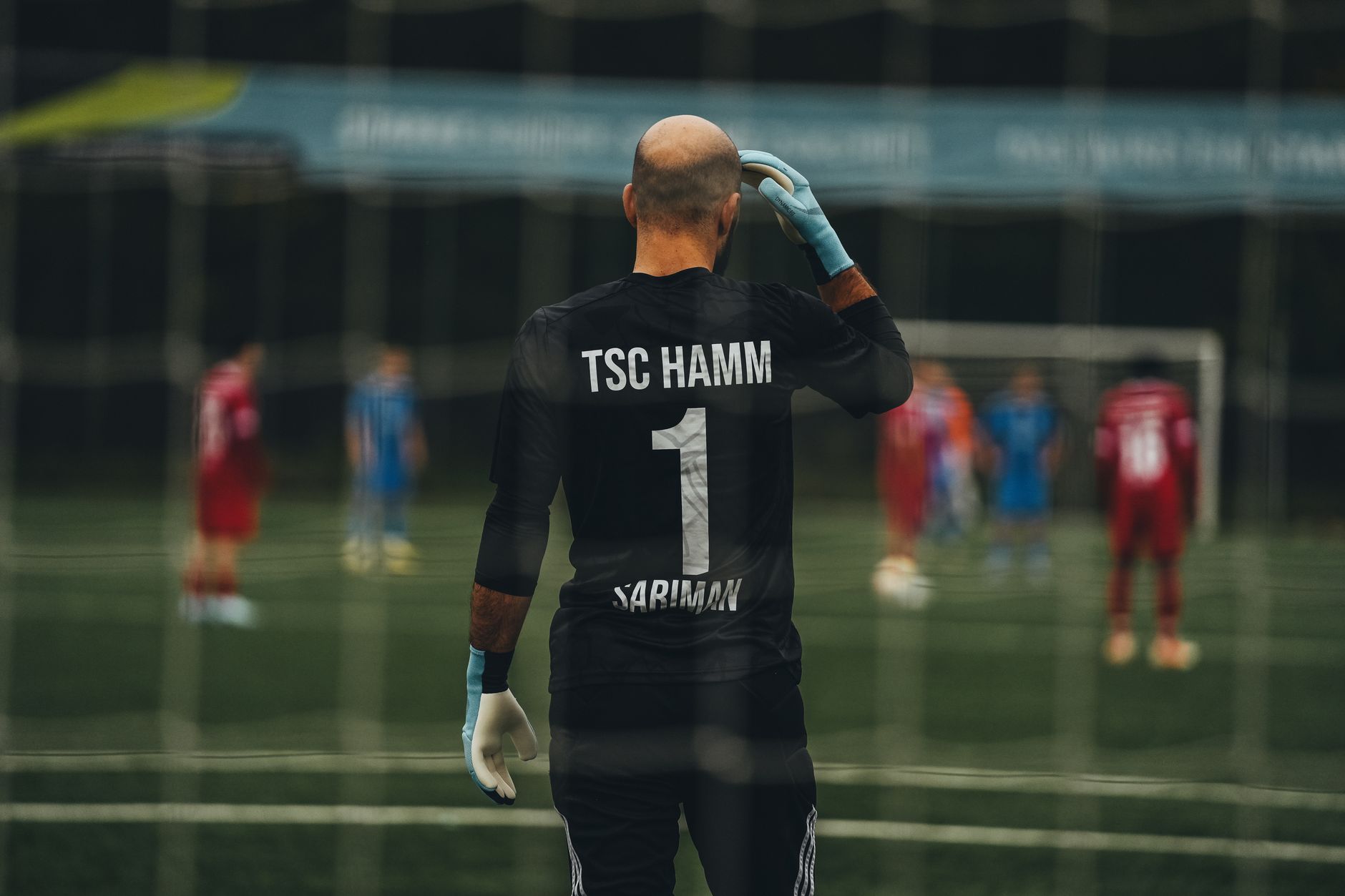
Photo by Omar Ramadan on Pexels
Want a cleaner way to read penalty decisions and match momentum? Review the official decision logic first.
If you are assessing a red-card incident: identify the review limit
VAR may review a direct red-card decision, including serious foul play, violent conduct, spitting, biting, or offensive and abusive actions. It generally does not review a clearly incorrect second yellow card under the standard four-category protocol. The review is about whether a sending-off offence occurred, not whether every disciplinary decision was perfectly judged.
A red-card review usually turns on the nature and intensity of the challenge. The VAR team may examine the point of contact, speed, force, studs, player safety, and whether the tackle endangered an opponent. Slow motion can make ordinary movement look violent, so referees must also consider the incident at full speed. This is a genuine judgement call, which is why the referee is often sent to the pitch-side monitor rather than receiving a simple factual instruction.
Mistaken identity is different. If the referee shows a card to the wrong player, VAR can correct the person responsible. However, VAR cannot erase every consequence after play restarts. Under the protocol, certain reviews become unavailable once the match has resumed, except for narrow cases such as mistaken identity or severe misconduct. That timing rule is easy to miss and explains many “why did they not check that?” arguments.
A useful operational edge for viewers is to watch the referee’s body language. A hand to the earpiece means the VAR check is active; a rectangle-shaped screen signal means an on-field review has been recommended or completed, depending on the competition’s communication practice. The check itself may be silent because the VAR is confirming a factual matter. No dramatic monitor visit does not mean nothing happened.
How does the VAR room actually work?
The VAR team works from a dedicated video operation room with independent access to match footage, replay controls, communication equipment, and multiple camera feeds. The lead VAR reviews the incident, while assistant VAR officials and replay operators help identify angles, timing, and relevant evidence. The match referee remains responsible for the final decision.
The setup varies by competition. Some matches use a centralised Video Assistant Referee hub serving several stadiums, while others place the operation at the venue. Broadcast cameras can include wide tactical views, goal-line cameras, behind-goal angles, and slow-motion feeds. The exact number depends on the tournament, production budget, stadium infrastructure, and whether technologies such as goal-line technology or semi-automated offside are installed.
The Fédération Internationale de Football Association (FIFA) treats VAR as part of a broader technology programme rather than a free-standing gadget. That distinction matters because a high number of cameras does not automatically guarantee a correct answer. A camera can be blocked, poorly aligned, or missing the decisive frame. The human review team still has to interpret what the equipment captures.
Here is the practical chain:
- The incident occurs and the referee makes or confirms a decision.
- VAR checks every potentially reviewable goal, penalty, red card, and identity incident.
- The VAR communicates only a recommendation, not an instruction.
- The referee reviews factual information or watches the pitch-side monitor.
- The referee signals the final outcome.
- Play restarts under the updated decision.
Common pitfalls to avoid
The biggest VAR mistake is assuming that every controversial event should be reviewed. The protocol is deliberately limited to four categories, and even within those categories the threshold is high. A bad throw-in, incorrect corner, missed yellow card, or ordinary foul outside a promising situation normally does not qualify. Complaining loudly does not expand the protocol, and players surrounding the referee can be punished rather than rewarded.
The second mistake is treating a replay as neutral truth. Slow motion changes how force, speed, and intent appear. A boot that slides across the grass in real time may look like a deliberate stamp when slowed down; a hand position that seems unnatural from one angle can look normal from another. A fair assessment requires the full sequence, not a social-media clip edited to support one club.
The third mistake is confusing “clear and obvious error” with “the decision I dislike.” IFAB explains that the original decision should not change unless video clearly demonstrates that standard. VAR therefore aims for intervention restraint. That is frustrating when your team loses, but from a value perspective it is sensible: constant intervention creates longer delays and moves authority away from the on-field referee without guaranteeing better judgement.
Avoid these common errors:
- Assuming VAR automatically overturns a decision.
- Believing every offside line is based on perfect camera calibration.
- Treating all handball contact as a penalty.
- Ignoring the difference between a direct red card and a second yellow.
- Betting while a goal or penalty remains under review.
- Assuming a restart can always be reversed later.
- Using one replay angle as the entire case.

Photo by Beyza Kaplan on Pexels
The honest conclusion is not that VAR is flawless. It is that VAR changes the price of uncertainty. A match still contains judgement, but the most expensive officiating errors now have a formal correction route. For disciplined football analysis, that is useful information rather than entertainment noise.
See how the review rules affect tournament interpretation and pre-match analysis.
The 30-day check-in
After following VAR decisions for 30 days, the most valuable habit is not counting how many times a referee visits the monitor. That number can flatter or distort the picture. Instead, track the incident type, original decision, review duration, final outcome, and whether the change affected the scoreline or a major betting market. A simple spreadsheet covering 20 to 30 matches will reveal more than a week of angry debate.
A practical tracking table should include:
| Field | What to record |
|---|---|
| Competition | FIFA World Cup 2026, UEFA Champions League, domestic league |
| Review category | Goal, penalty, red card, mistaken identity |
| Initial call | Goal, no goal, penalty, no penalty, card |
| Review route | Silent check or on-field review |
| Final decision | Confirmed, overturned, or corrected |
| Match impact | Score, player availability, market movement |
| Delay | Approximate seconds before restart |
This approach produces two useful insights. First, VAR is most valuable when the incident has a high cost, such as a disallowed goal or a potential sending-off, not when it merely settles a minor argument. Second, the existence of a review can influence match behaviour even before the final call: defenders may hesitate after a penalty appeal, attackers may continue a move because the assistant referee delays an offside flag, and sportsbooks may suspend markets to protect against stale prices.
There is also a contrarian point worth keeping. More technology does not necessarily mean shorter reviews. A dense camera network can create more possible interpretations, particularly in crowded penalty areas. The commercial value is therefore accuracy and decision confidence, not speed alone. If a platform promises that VAR makes every match “instant and perfect,” it is selling a slogan, not explaining football.
Fan Strategy readers can use the 30-day record to improve match previews without pretending that VAR outcomes are predictable. Note the teams involved, referee decisions, late-game pressure, and whether the incident came from a set piece or open play. Those patterns can inform risk management, but they should never be treated as a guaranteed betting system.

Photo by Kampus Production on Pexels
Ready to turn match technology into better football reading? Follow the evidence, not the loudest replay clip.
Frequently Asked Questions
Q: What is VAR in football?
A: VAR is a video review system that assists the on-field referee with four match-changing categories: goals, penalty decisions, direct red cards, and mistaken identity. A Video Assistant Referee checks replay footage and may recommend a review when there is a clear and obvious error or serious missed incident. The referee always makes the final decision under the IFAB protocol. VAR is used in competitions approved by FIFA and is common in the FIFA World Cup, UEFA Champions League, and many domestic leagues.
Q: How does VAR work during a football match?
A: VAR automatically checks potentially reviewable incidents, studies available camera angles, and communicates a recommendation to the referee when the threshold for intervention may be met. The referee can accept factual information, such as an offside finding, or watch the pitch-side monitor for a judgement decision. The final outcome is then signalled before play restarts. There is no fixed universal time limit because accuracy is prioritised over speed, although competitions aim to keep interruptions controlled.
Q: What is the difference between a VAR check and an on-field review?
A: A VAR check is a remote assessment by the video team, while an on-field review requires the referee to watch footage at the stadium monitor. Many factual decisions can be confirmed through a silent check without a monitor visit. Subjective decisions involving fouls, handball, or red-card severity commonly require the referee to assess the replay personally. In both cases, the referee—not the VAR—owns the final decision.
Q: Can VAR overturn every referee decision?
A: No, VAR cannot overturn every referee decision because its protocol covers only four categories and requires a clear and obvious error or serious missed incident. Ordinary fouls, most yellow cards, throw-ins, corners, and many free-kick disputes are outside the standard review scope. A decision may also remain unchanged when replay evidence is inconclusive. This limitation is intentional because unrestricted review would create longer delays and weaken the referee’s role.
Q: Why does VAR sometimes fail to change an obvious decision?
A: VAR may leave a decision unchanged when the footage does not clearly prove that the original call was a clear and obvious error. Different camera angles can show contact without proving an offence, especially in penalty and handball incidents. The referee also considers the full-speed action because slow motion can exaggerate force or intent. Viewers should therefore distinguish between disagreement with a decision and evidence that the protocol’s intervention threshold has been met.
Q: Does VAR cost fans or bettors extra money?
A: VAR itself is part of competition officiating and does not normally create a separate charge for stadium fans, but it can affect betting markets, subscriptions, and match viewing decisions. Sportsbooks often suspend goal, penalty, and related markets while a review is active, and settled wagers may be changed under the operator’s rules if the official result changes. Always check the bookmaker’s settlement policy before placing live bets. VAR is an uncertainty-control tool, not a guarantee of profitable betting.
Q: How should I follow VAR during the FIFA World Cup 2026?
A: Follow the referee’s review signal, wait for the final decision and restart, and record the incident category before judging its impact. FIFA World Cup 2026 viewers should pay particular attention to goal reviews, semi-automated offside support, penalty decisions, and direct red-card incidents. Fan Strategy match coverage can help place those decisions within team tactics, player statistics, and tournament context. The most disciplined approach is to treat a provisional call as unsettled information until the referee confirms it.
VAR is valuable because it corrects some of football’s costliest mistakes, not because it eliminates controversy. Watch the category, the evidence, the referee’s threshold, and the restart. That is how VAR works—and how serious fans should read it.
For more tournament analysis, continue with Fan Strategy’s [Internal Link: World Cup predictions and tactical previews].
Thank you for reading. Stay focused on the evidence, manage your risk carefully, and follow responsible betting practices.
Thank you for reading.
Fan Strategy · The Sovereign Editorial · Vol. I